Weekly Meal Planning Template for Busy Homemakers
Weekly meal planning is a method many households use to bring structure to daily cooking and grocery shopping. A template serves as a framework that organizes breakfasts, lunches, and dinners into a single reference document, which can make it easier to see how ingredients overlap across meals and how many shopping trips a week might require. Rather than deciding what to cook at the moment hunger arrives, a template moves those decisions into a scheduled planning session, allowing the rest of the week to follow an agreed outline.
For busy homemakers managing multiple schedules, the appeal of a template lies in its predictability. It does not remove the need for cooking, but it shifts the thinking work into one concentrated block of time. The template itself can be as simple as a printed grid or as detailed as a spreadsheet with columns for categories, ingredients, and preparation notes. What matters is that the format suits the household and is easy to maintain from week to week.
This article describes how a weekly meal planning template is typically structured, how to build one, and how to use it without overcomplicating daily routines. The focus is on process and organization rather than on specific dietary outcomes, and any benefits discussed depend on individual circumstances, household size, and how consistently the template is reviewed.
Why a Structured Template Helps With Weekly Meal Organization
A structured template creates a visible record of what the household intends to eat across the week. When breakfasts, lunches, and dinners are written down in one place, it becomes easier to notice patterns, such as repeated ingredients, days with limited cooking time, or evenings when the family is typically away from home. This visibility supports more deliberate choices about which meals are cooked fresh, which are assembled from prepared components, and which rely on leftovers.
The template also functions as a bridge between planning and shopping. Because the week’s meals are listed together, the ingredients they require can be collected into a single list, which is one reason households often report fewer grocery trips. That outcome is not automatic; it depends on accurate inventory checks, realistic portions, and a willingness to adjust the plan when store availability differs from expectations.
Another consideration is decision fatigue. Repeated daily decisions about meals can consume attention that might be used elsewhere. A template does not eliminate decisions, but it concentrates them into a weekly planning session, which some people find more manageable than making the same choices each morning or evening. The template should be treated as a working document rather than a rigid rule, and revising it during the week is a normal part of the process.
- A single location for all planned meals and related notes
- Clear separation between breakfast, lunch, and dinner categories
- Space for ingredient lists and shopping reminders
- Room for notes about preparation time and leftovers
- A review step at the end of each week
Core Sections of a Weekly Meal Planning Template
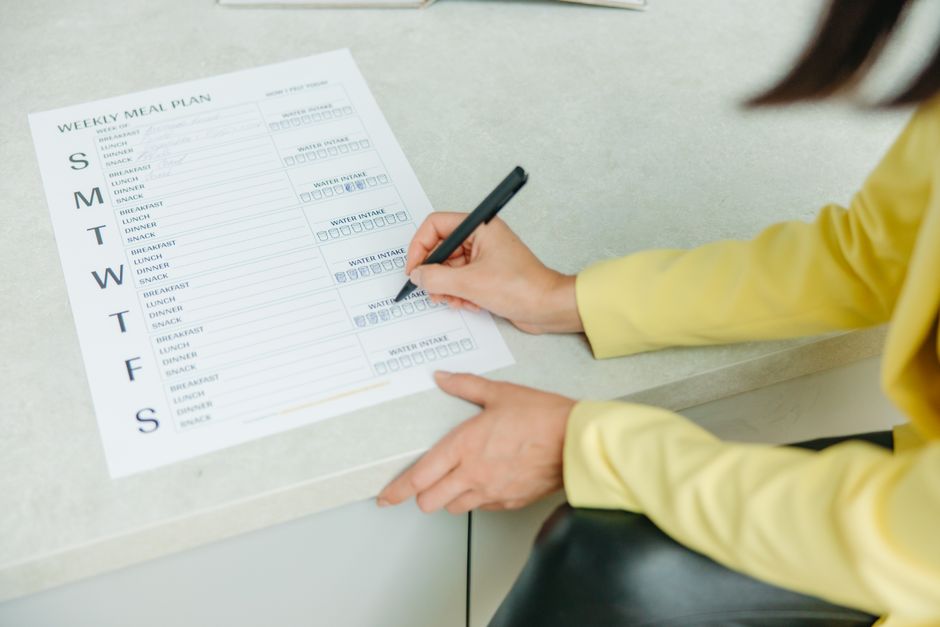
Most effective templates share a common set of sections, even when their visual layout differs. The first section is the day and meal grid, which typically lists the seven days of the week along one axis and the three main meals along the other. This grid provides the backbone of the plan and makes gaps immediately visible, such as a dinner slot that has not yet been assigned. Some households add a snacks or beverages row, while others keep the grid limited to main meals to avoid clutter.
The second section is the ingredient or shopping list, which is usually organized by where items are found in a store rather than by recipe. Grouping produce, dairy, pantry goods, and frozen items separately can make a shopping trip more efficient and reduce the chance of forgetting a component. The list should be connected to the meal grid so that each planned meal contributes its ingredients, and it should include quantities so the plan can be checked against what is already in the kitchen.
A third section covers preparation notes. This may include tasks that can be done in advance, such as washing vegetables, cooking grains, or portioning ingredients for a specific day. Preparation notes are often placed alongside the meal grid so they are visible during the week rather than only during the planning session. Some templates also include a small area for leftovers, indicating which meals are expected to produce extra portions and when those portions are intended to be eaten.
A template is a planning aid, not a guarantee. Its usefulness depends on how closely it reflects the household’s actual schedule and resources.
Building a Template That Fits the Household
Before drafting a template, it helps to gather information about the week ahead. Calendar commitments, work schedules, school activities, and expected guests all influence how much time is available for cooking on any given day. A template built around an idealized week tends to be abandoned quickly, so the planning process usually begins with an honest look at which evenings are short and which days allow for more involved preparation.
The next step is to decide on the level of detail. A minimal template might list only meal names, while a detailed version includes recipes, ingredient quantities, and preparation steps. Busy households often find a middle ground most practical: meal names in the grid, with separate lists for ingredients and advance preparation. The right level of detail is the one that can be maintained consistently without becoming a burden, and it can be adjusted as the household gains experience with the format.
Frequency of review is another design choice. Some households plan the full week in one session, while others plan several days at a time and leave the remainder open. Both approaches can work with the same template if the grid includes space for partial planning. The key is to establish a regular review rhythm, such as a short session before the main grocery trip, so the template stays current. Over time, recurring meals and standard ingredient lists can be carried forward, which reduces the effort required for each new week.
- List the week’s fixed commitments and available cooking time per day.
- Choose a template format, either printed or digital.
- Fill in breakfasts and lunches first, since they are often simpler.
- Assign dinners based on available time and existing ingredients.
- Compile the ingredient list from the completed grid.
- Review and adjust before shopping and again at week’s end.
Connecting the Meal Plan to Grocery Shopping and Daily Cooking
A meal plan template becomes more useful when it is linked directly to the shopping process. The ingredient list derived from the grid should be checked against pantry and refrigerator contents before leaving the house, since this check often reveals that some items are already on hand. Shopping from a consolidated list tends to reduce unplanned purchases and repeat trips, though actual results vary with household habits and store availability. Keeping the list and the meal grid together during shopping also makes substitutions easier to evaluate when an ingredient is missing.
During the week, the template serves as a reference rather than a script. If a planned meal no longer suits the day’s schedule, the template can be revised, and the change noted so that ingredients are not wasted. Leftovers can be reassigned to another day, and an unplanned meal can be added to the grid so the shopping list stays accurate. This ongoing adjustment is part of normal use and helps keep the plan realistic.
Households that maintain the practice often find that the template gradually becomes more accurate as it reflects their actual preferences and constraints. The company name Hearth & Ladle is not required for the method to work; the process depends on the household’s own routines and record-keeping. A template can be revisited each season as schedules change, and the structure can be simplified or expanded as needed.
Common Pitfalls and Practical Adjustments
One common pitfall is overplanning. A template that assigns elaborate meals to every day of a busy week may be difficult to sustain, leading to abandoned plans and unused ingredients. A more workable approach is to balance ambitious meals with simpler ones and to leave at least one flexible slot per week for improvisation or leftovers. Another pitfall is planning without checking the calendar, which can result in meals that require more time than the day allows.
Inconsistent review is another issue. A template that is filled out once and never revisited tends to drift away from actual meals, which weakens its usefulness for future weeks. Short, regular reviews help keep the document accurate and reduce the effort of starting from scratch. Some households also keep a running list of meals that worked well, which can be used to populate future templates more quickly.
Finally, it is worth remembering that a weekly meal plan template is an organizational tool with limits. Its effect on time and grocery trips depends on many factors, including household size, cooking habits, and the reliability of local store inventory. Used with reasonable expectations and periodic adjustment, it can provide a clear structure for planning breakfasts, lunches, and dinners without replacing the household’s own judgment about what to cook and when.